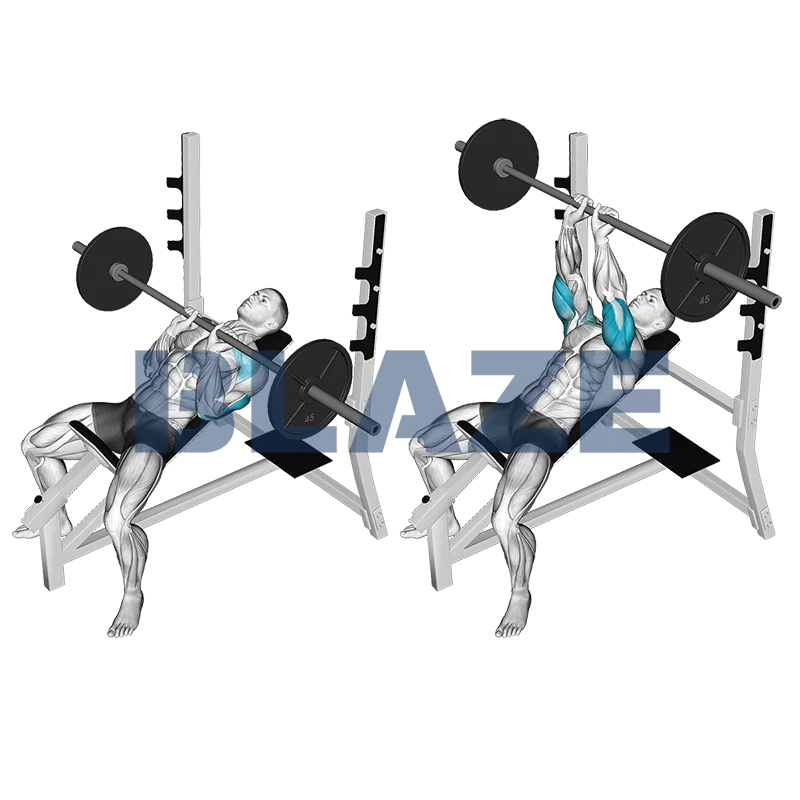
Bench press with barbell and close grip (inclined)
The barbell incline bench press (reverse grip) offers several benefits, including enhanced upper chest development and improved shoulder definition. Muscles activated include the upper chest (pectoralis major), shoulders (anterior deltoids), and triceps. This exercise is particularly beneficial for athletes aiming to achieve a well-rounded chest appearance while also strengthening their shoulder stability and triceps. By altering the grip, it reduces strain on the shoulders, making it a safer alternative for those with shoulder issues, enhancing overall upper body power and aesthetics.
| Primary muscle group: | Arms |
| Exercise type: | Barbell |
| Exercise goal: | Strength |
| Key metric: | Weight |
Community Averages
56kg
Avg. weight
124lbs
Avg. weight
Popularity
* Based on data from the Blaze community
Description
- 1Lie with your back on a bench that is inclined at a 45 degrees angle. The bar should be on the level of your eyes.
- 2Place your feet firmly on the ground. Grasp the bar with both hands, your hands should be less than shoulder-width apart. Push the bar up until your arms are almost fully extended. Straighten your wrists when holding the barbell.
- 3Inhale as you lower the barbell to your chest.
- 4Exhale as you press the barbell back up until your arms are almost fully extended.
- 5You have completed your first repetition. Repeat the motion in a controlled way and count your reps.
Tips & Tricks
Use a reverse grip by having your palms facing you as you grip the barbell.
Ensure your grip is firm but not too tight to maintain control throughout the movement.
Use a shoulder-width grip to maximize chest muscle activation and maintain better control.
Set the incline bench to around 30-45 degrees. This angle helps to target the upper chest more effectively.
Keep your elbows tucked closer to your body instead of flaring them out. This reduces the strain on your shoulder joints and targets the chest muscles better.
Focus on slow and controlled movements both as you lower and press the barbell. Avoid using momentum to lift the weight.
Inhale as you lower the barbell to your chest and exhale as you press it back up. Proper breathing ensures better performance and safety.
Always use a spotter or ensure safety pins are set up properly if you're lifting heavy. Prioritize your safety to avoid injuries.
Don't neglect a good warm-up routine to get your muscles ready for the exercise, which can prevent strains and enhance your lifting capacity.
Concentrate on engaging your chest muscles throughout the movement. Maintaining a strong mind-muscle connection enhances workout effectiveness.
Gradually increase the weight as your strength improves. Avoid lifting too heavy too soon to prevent injury.
Track in the Blaze App
Download Blaze Workout Tracker to log this exercise with sets, reps, and progress tracking.