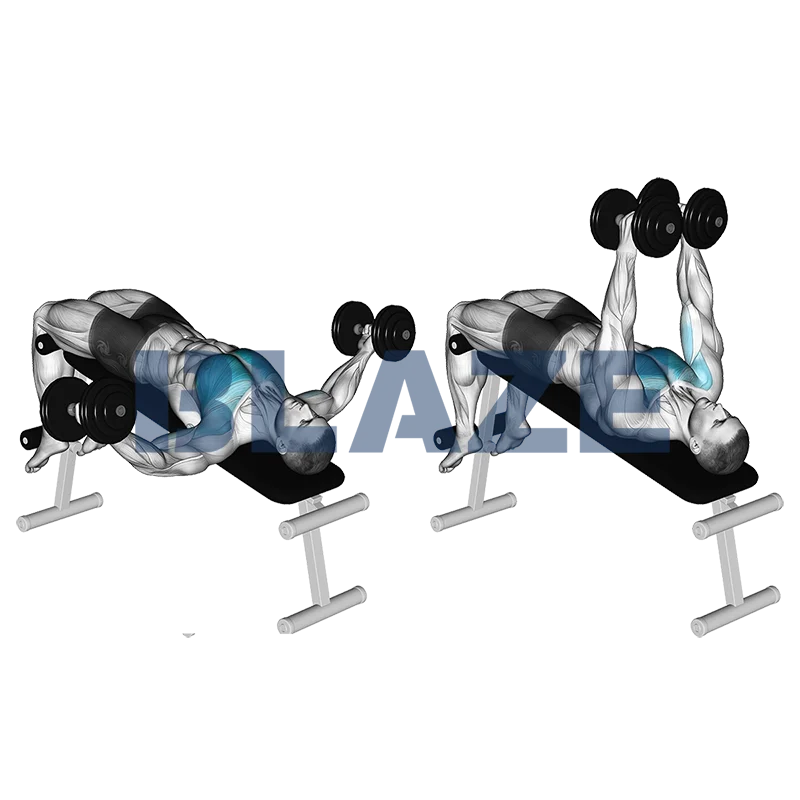
Chest fly with dumbbells (declined)
The dumbbell declined chest fly is an effective exercise targeting the lower chest, shoulders, and triceps. By performing this move on a decline bench, athletes can specifically engage the lower pectoral muscles more intensely than standard fly exercises. Benefits include improved muscle definition, enhanced upper body strength, and better chest muscle balance. This exercise activates the pectoralis major, anterior deltoids, and triceps, providing a comprehensive upper-body workout. Ideal for athletes aiming for increased power, stability, and muscular symmetry in their chest and shoulder regions.
| Primary muscle group: | Chest |
| Exercise type: | Dumbbell |
| Exercise goal: | Strength |
| Key metric: | Weight |
Community Averages
26kg
Avg. weight
58lbs
Avg. weight
Popularity
* Based on data from the Blaze community
Description
- 1Sit on a decline bench, with a dumbbell in each hand. Rest the dumbbells on your knees.Hook your feet under the foot pads or have a spotter hand you the dumbbells.
- 2Lie back on the bench, while raising the dumbbells over your upper abdomen.
- 3Flex your elbows slightly and internally rotate your shoulders, pointing your elbows out to the sides.
- 4Inhale as you lower the dumbbells in a semicircular motion to your sides, until you feel a slight stretch in your chest.
- 5Exhale as you reverse the motion, bringing the dumbbells back up over your chest in a hugging movement.
- 6Repeat these steps for the prescribed number of repetitions.
Tips & Tricks
Maintain Controlled Movements: Avoid dropping your arms too quickly. Instead, move slowly and control the weight, focusing on the stretch and contraction of the chest muscles.
Inhale & Exhale: Remember to breathe properly. Inhale as you lower the dumbbells and exhale as you bring them back together. Proper breathing aids in muscle performance and endurance.
Correct Bench Angle: Ensure the decline bench is set at an appropriate angle, typically between 15 to 30 degrees. This helps to target the lower part of your chest without putting excessive strain on your shoulders.
Elbow Positioning: Keep your elbows slightly bent throughout the movement. Locking them straight can place undue stress on your elbow joints.
Avoid Overstretching: Do not let the dumbbells go too far down during the lowering phase. Overstretching can cause strain or injury to your shoulder joints and chest muscles.
Start Light: Begin with lighter weights to master the form before progressing to heavier dumbbells. Proper form is more important than lifting heavy.
Mind-Muscle Connection: Focus on squeezing your chest muscles together as you lift the dumbbells. Engaging your chest intentionally will enhance muscle activation and growth.
Bench Safety: Ensure the bench you’re using is stable and sturdy. A wobbly bench can lead to improper form and potential injuries.
Spotter Assistance: If you’re lifting heavier weights, consider having a spotter to ensure safety, especially while setting up and finishing the exercise.
Balanced Reps: Make sure to perform an equal number of reps on each side to maintain muscle symmetry and prevent imbalances.
Track in the Blaze App
Download Blaze Workout Tracker to log this exercise with sets, reps, and progress tracking.