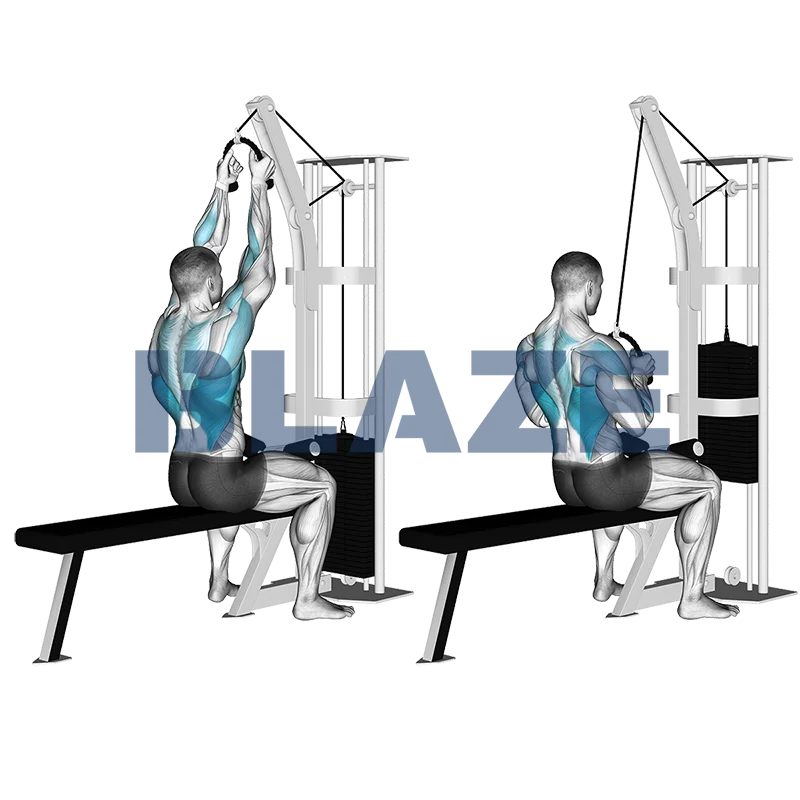
Lat pull down (close grip)
The cable lat pulldown is an effective exercise for building upper body strength, particularly targeting the latissimus dorsi, biceps, forearms, and deltoids. By using a rope attachment, this exercise enhances grip strength and allows for a greater range of motion, promoting better muscle engagement and functional strength. Athletes benefit from this exercise as it improves pulling power and stability, essential for sports requiring upper body strength, such as swimming, rowing, and climbing. Enhanced back strength also aids in maintaining proper posture and injury prevention.
| Primary muscle group: | Back |
| Exercise type: | Cable |
| Exercise goal: | Strength |
| Key metric: | Weight |
Community Averages
67kg
Avg. weight
147lbs
Avg. weight
Popularity
* Based on data from the Blaze community
Description
- 1Sit on the lat pull-down machine with your thighs positioned snugly under the supports.
- 2Grasp the double-row V handle. Your arms and shoulders should be fully extended upward.
- 3Exhale as you pull the handle down until it touches your upper chest.
- 4Squeeze your back muscles and hold for a count of two.
- 5Inhale as you return the handle to the starting position.
- 6Repeat.
Tips & Tricks
Mind-Muscle Connection: Focus on engaging your latissimus dorsi muscles as you perform the exercise. Imagine your elbows pulling down and back, rather than thinking of your hands doing the work.
Proper Posture: Maintain a slight arch in your lower back and push your chest up throughout the movement. This helps to maximize the engagement of your back muscles and reduces the risk of injury.
Grip Technique: Use a close, neutral grip (palms facing each other). This grip can help minimize stress on your wrists and shoulders, while effectively targeting the lats and the muscles of the mid-back.
Controlled Movements: Avoid using momentum to pull the weight down. Instead, use a controlled motion and pause briefly at the bottom of the movement to maximize muscle contraction before slowly returning the weight to the starting position.
Breathing: Exhale as you pull the bar down toward your chest. Inhale as you allow the bar to return to the starting position. Proper breathing can enhance your performance and help maintain stability.
Range of Motion: Ensure you are using a full range of motion by fully extending your arms at the top and pulling the bar down to your upper chest. Avoid leaning too far back; maintain a slight, natural lean.
Progressive Overload: Gradually increase the resistance over time to ensure continued progression. However, always prioritize proper form over heavier weights to prevent injury.
Track in the Blaze App
Download Blaze Workout Tracker to log this exercise with sets, reps, and progress tracking.