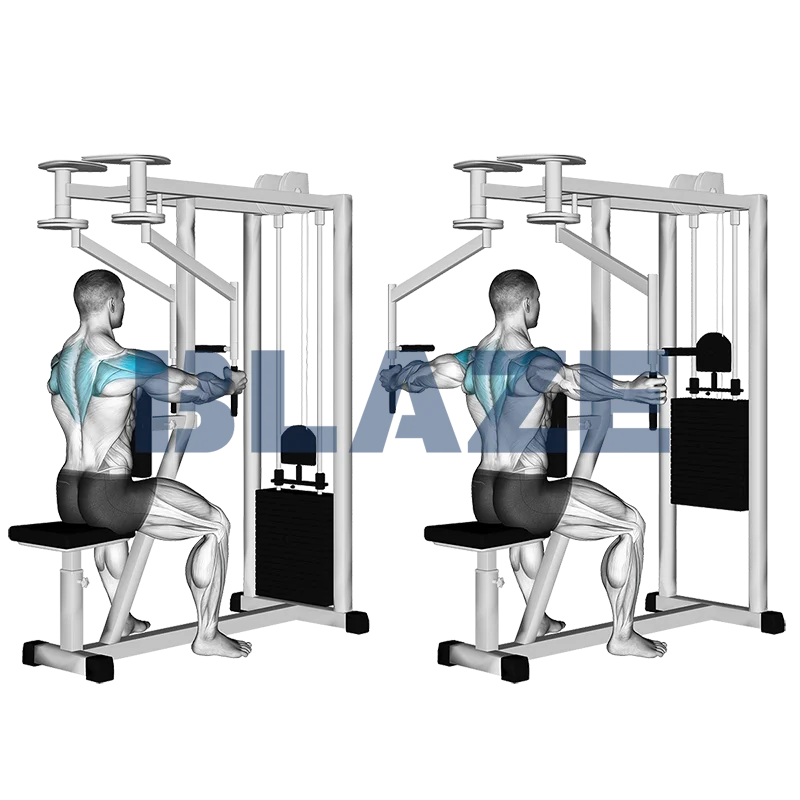
Reverse shoulder fly on machine
Reverse shoulder fly on machine emphasize the posterior deltoids, rhomboids, and middle trapezius, promoting balanced shoulder strength. This exercise also engages the rear delts and upper back, crucial for shoulder stability and improving posture. Athletes benefit as it enhances scapular retraction and reduces injury risk from imbalanced shoulder development. Integrated into a training regimen, reverse machine flyes bolster upper body strength, crucial for performance in sports requiring dynamic shoulder movements and robust back muscle involvement.
| Primary muscle group: | Back |
| Exercise type: | Machine |
| Exercise goal: | Strength |
| Key metric: | Weight |
Community Averages
35kg
Avg. weight
76lbs
Avg. weight
Popularity
* Based on data from the Blaze community
Description
- 1Adjust the handles on the machine so they are fully to the rear position.
- 2Select an appropriate weight and adjust the seat height so the handles align with your shoulders.
- 3Grasp the handles with your palms facing inward to assume the starting position.
- 4In a semicircular motion, pull your hands out to your sides and back, focusing on contracting your rear delts.
- 5Keep your arms slightly bent and ensure all movement occurs at the shoulder joints.
- 6Pause briefly at the rear of the movement, feeling the contraction in your rear delts.
- 7Slowly return the weight to the starting position, maintaining control throughout the motion.
- 8Repeat the steps for the desired number of repetitions.
Tips & Tricks
Proper Adjustment: Ensure that the seat and handles of the machine are properly adjusted to your height and arm length. Your chest should be firmly pressed against the pad, and the handles should be at shoulder level.
Mind Your Form: Keep your back straight and maintain a slight bend in your elbows throughout the movement. Avoid fully extending your arms as this can place unnecessary strain on your elbows and reduce the effectiveness of the exercise.
Controlled Motion: Focus on a slow and controlled movement both during the contraction and the release phases. This helps to engage the target muscles more effectively and avoids using momentum to move the weight.
Neutral Spine: Maintain a neutral spine by keeping your head in line with your torso. Avoid tilting your head forward or backward during the exercise as this may lead to neck strain.
Engage Your Core: Tighten your core muscles to stabilize your torso. This will help you maintain correct posture and prevent lower back strain.
Squeeze at the Top: At the peak of the movement, squeeze your shoulder blades together for a second or two. This will increase muscle activation and improve the overall effectiveness of the exercise.
Breathing Technique: Exhale as you push the handles outward and inhale as you bring them back in. Proper breathing supports better muscle function and endurance.
Start Light: Begin with a lighter weight to master your form before gradually increasing the resistance. This helps to prevent injury and ensures that you are isolating the correct muscle groups.
Avoid Overstretching: Do not let the handles come too far forward or backward, as overstretching can compromise your shoulder health and lead to injury. Keep the range of motion controlled and within a comfortable limit.
Consistent Training: Incorporate this exercise regularly into your fitness routine for steady improvement in your shoulder strength and definition.
Track in the Blaze App
Download Blaze Workout Tracker to log this exercise with sets, reps, and progress tracking.