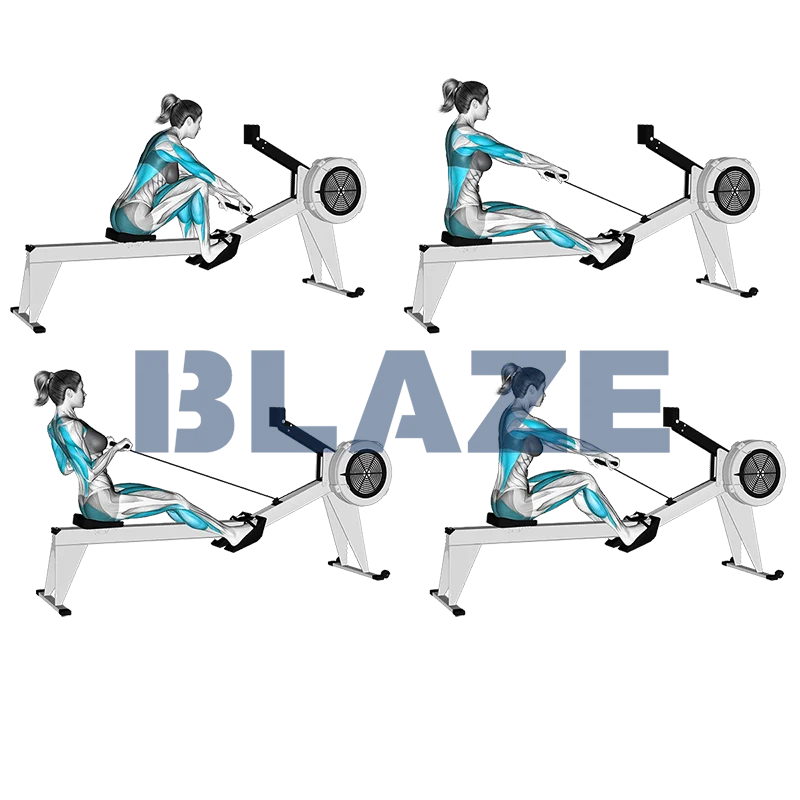
Rowing machine
Rowing on a rowing machine offers full-body benefits, targeting muscles in the upper back, arms, abs, and legs. Key muscles activated include the quadriceps, hamstrings, glutes, lats, traps, and deltoids. The exercise promotes cardiovascular health, enhancing endurance and stamina. For athletes, rowing improves overall strength, boosts aerobic capacity, and provides a low-impact workout reducing injury risk. Perfect for cross-training, it sharpens competitive edge by enhancing core stability, power, and fluid motion mechanics.
| Primary muscle group: | FullBody |
| Exercise type: | Machine |
| Exercise goal: | Cardio |
| Key metric: | Duration |
Community Averages
0:07:45
Avg. duration
Popularity
* Based on data from the Blaze community
Description
- 1Setup: Seat yourself on the rower. Position your heels comfortably against the base of the foot pedals and securely tighten the straps.
- 2Program Selection: Select the program you wish to use, if applicable.
- 3Starting Position: Sit up straight and lean slightly forward at the hips with your knees bent and close to your chest.
- 4Drive Phase: Push firmly against the foot pedals to extend your legs. Simultaneously, pull the handle towards your upper abdominal area, squeezing your shoulder blades back.
- 5Leg and Hip Focus: Engage primarily your leg and hip muscles to avoid straining your back.
- 6Recovery Phase: Straighten your arms, bend your knees, and lean your body slightly forward to return to the starting position.
- 7Repetition: Repeat the sequence in a controlled manner, focusing on smooth transitions through each phase.
Tips & Tricks
Proper Form: Always maintain good posture by keeping your back straight and your shoulders relaxed. Engage your core muscles throughout the exercise to protect your lower back.
Catch Position: Start with your knees bent and arms extended forward. Ensure that your shins are vertical, and avoid hunching over.
Drive Phase: Push through your heels to extend your legs, then lean back slightly, and finally, pull the handle towards your chest. Keep the sequence order – legs, core, arms.
Recovery Phase: Reverse the motion in a controlled manner – extend your arms, hinge at the hips to lean forward, and then bend your knees. Focus on smooth and fluid movements.
Consistent Pace: Maintain a steady rhythm. Try to keep your strokes per minute (SPM) consistent to build endurance and prevent fatigue.
Resistance Settings: Start with a lower resistance to get used to the motion, and gradually increase resistance as your strength and technique improve.
Breathing: Breathe naturally – exhale during the drive phase and inhale during the recovery phase. This helps maintain a steady rhythm and oxygen flow.
Warm-Up and Cool-Down: Spend a few minutes warming up your muscles with light rowing or dynamic stretches before starting your workout, and cool down with lower intensity rowing and stretches afterward.
Monitor Progress: Use the rowing machine's monitor to track your metrics such as distance, time, and SPM. Set goals and challenge yourself to improve incrementally.
Mindful Movement: Focus on the quality of your strokes rather than just getting through the reps. Performing the exercise correctly will lead to better results and reduce injury risk.
Hydration: Keep a water bottle nearby. Staying hydrated is crucial during any form of exercise to maintain performance and recovery.
Foot Placement: Adjust the foot straps so your feet are secure but not too tight. Proper foot placement ensures efficient transfer of power during the drive phase.
Track in the Blaze App
Download Blaze Workout Tracker to log this exercise with sets, reps, and progress tracking.