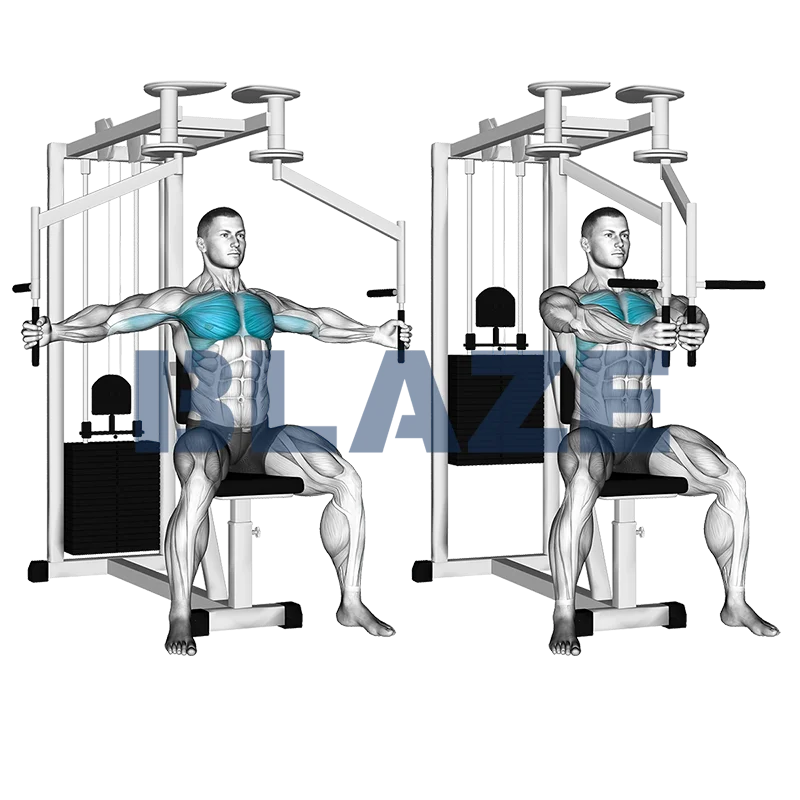
Chest fly on machine (seated)
The machine seated chest fly exercise primarily targets the pectoral muscles, specifically the chest, and also engages the deltoids and biceps. This exercise is beneficial for enhancing upper body strength, improving muscular endurance, and promoting muscle symmetry. Athletes can profit from incorporating the machine Seated Fly into their training regimen as it aids in building a powerful chest, which is crucial for sports requiring upper body power, such as swimming and football. Additionally, it offers controlled, isolated movement, reducing injury risk.
| Primary muscle group: | Chest |
| Exercise type: | Machine |
| Exercise goal: | Strength |
| Key metric: | Weight |
Community Averages
41kg
Avg. weight
91lbs
Avg. weight
Popularity
* Based on data from the Blaze community
Description
- 1Sit on the fly machine with your back pressed firmly against the back support.
- 2Grasp the levers positioned at shoulder height.
- 3Internally rotate your shoulders to align your wrists, elbows, and shoulders.
- 4Keep your elbows slightly bent throughout the exercise.
- 5Exhale as you push the levers together in front of you.
- 6Inhale and slowly reverse the motion until you feel a mild stretch in your chest or shoulders.
- 7Return to the starting position and repeat the exercise as necessary.
Tips & Tricks
Adjust the Seat Height: Ensure that the seat is at the correct height so that the handles are at chest level. This will allow for the proper range of motion and optimal muscle engagement.
Secure Your Back and Shoulders: Keep your back firmly against the backrest and your shoulders stabilized throughout the movement. This helps target your pectoral muscles more effectively while preventing strain on your shoulders.
Grip Position: Use a comfortable, overhand grip. Your palms should be facing each other, and your wrists should be in a straight, neutral position to avoid unnecessary strain.
Controlled Movement: Focus on slow and controlled movements both when bringing the handles together and when allowing them to return to the starting position. This maximizes muscle tension and effectiveness.
Full Range of Motion: Ensure you are bringing the handles together fully until they almost touch. When returning, stretch until you feel a slight stretch in your chest but avoid overstretching to prevent injuries.
Elbow Position: Keep a slight bend in your elbows throughout the exercise. This helps reduce joint strain and keeps the emphasis on your chest muscles.
Breath Consistency: Exhale as you bring the handles together and inhale as you return to the starting position. Proper breathing aids in maintaining rhythm and supporting muscle engagement.
Mind-Muscle Connection: Focus on squeezing your chest muscles as you bring the handles together. The better your mind-muscle connection, the more effective the exercise will be.
Don't Overload: Start with a weight that allows you to perform the exercise with proper form. Overloading can compromise your technique and increase the risk of injury.
Warm-up and Stretch: Ensure you warm up your chest muscles and do some light stretching beforehand to prepare your muscles and joints for the exercise.
Track in the Blaze App
Download Blaze Workout Tracker to log this exercise with sets, reps, and progress tracking.