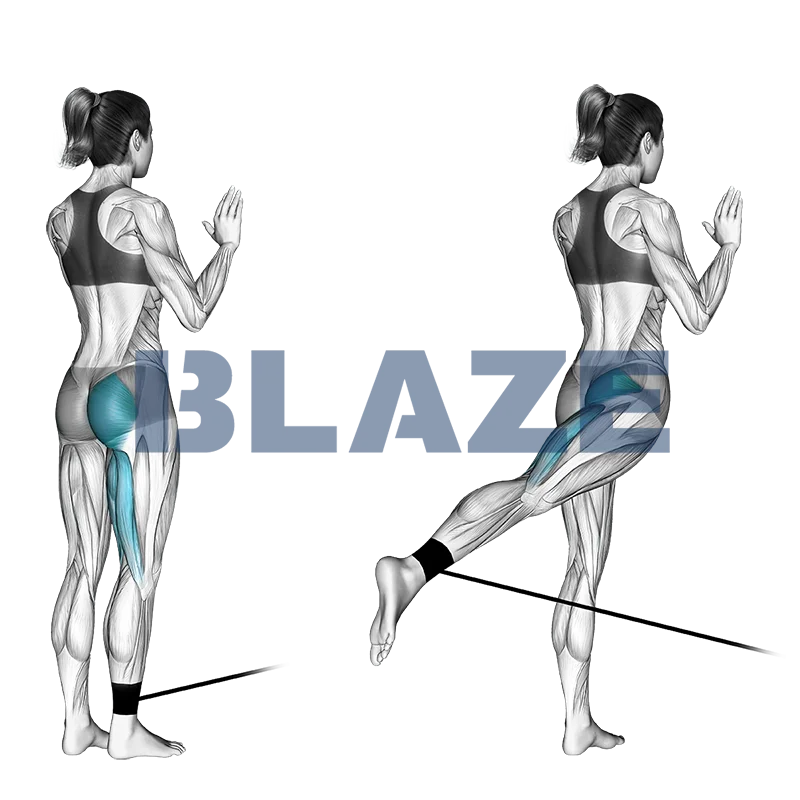
Standing hip extension with cable
Cable standing hip extension is an effective exercise targeting the glutes and hamstrings. This movement enhances lower body strength, stability, and flexibility. Athletes benefit from improved performance in sports requiring explosive power and agility, such as running and jumping. Engaging the core for stability during the exercise also aids in overall balance and posture. Integrating this exercise into a training regimen can prevent injuries and boost athletic performance by promoting dynamic strength and muscle coordination.
| Primary muscle group: | Legs |
| Exercise type: | Cable |
| Exercise goal: | Strength |
| Key metric: | Weight |
Community Averages
28kg
Avg. weight
61lbs
Avg. weight
Popularity
* Based on data from the Blaze community
Description
- 1Attach Cable to Ankle: Clip a low cable attachment to an ankle strap secured around one of your ankles.
- 2Position Yourself: Take a step back with your free leg, ensuring the leg attached to the cable is in front and the cable is taut.
- 3Stabilize: Hold onto the cable pulley with one hand for stability.
- 4Perform the Movement: Keeping your torso upright and the working leg straight, exhale as you extend your hip, pulling the cable back until your hip is fully extended.
- 5Hold and Squeeze: Hold the extended position for a count of two while squeezing your glute.
- 6Return to Start: Inhale as you slowly return your leg to the starting position.
- 7Repeat the Exercise: Perform the desired number of repetitions, then switch the cable to the opposite ankle and repeat the movement with the other leg.
Tips & Tricks
Maintain Proper Posture: Keep your back straight and your core engaged throughout the movement to avoid putting undue stress on your lower back.
Controlled Movements: Focus on slow, controlled movements to maximize muscle engagement and to reduce the risk of injury.
Foot Position: Ensure that your standing foot is securely planted and slightly bend the knee of the standing leg to maintain balance and stability.
Cable Height: Adjust the cable to a low position so that the pulley is close to the ground, which allows for a full range of motion.
Avoid Momentum: Use your glute muscles to move the leg backward rather than swinging your leg or relying on momentum.
Range of Motion: Extend your leg backward just until you feel a solid contraction in your glutes. Overextending can put unnecessary strain on your lower back.
Focus on the Mind-Muscle Connection: Concentrate on flexing your glutes during the extension phase to ensure you are targeting the right muscle group.
Breathing Technique: Inhale as you prepare and exhale slowly as you extend your leg backward. Proper breathing helps with focus and performance.
Foot Alignment: Keep your foot flexed, not pointed, to further activate your glute muscles during the exercise.
Rest Intervals: Make sure to take adequate rest between sets to allow your muscles to recover and maintain form.
Track in the Blaze App
Download Blaze Workout Tracker to log this exercise with sets, reps, and progress tracking.