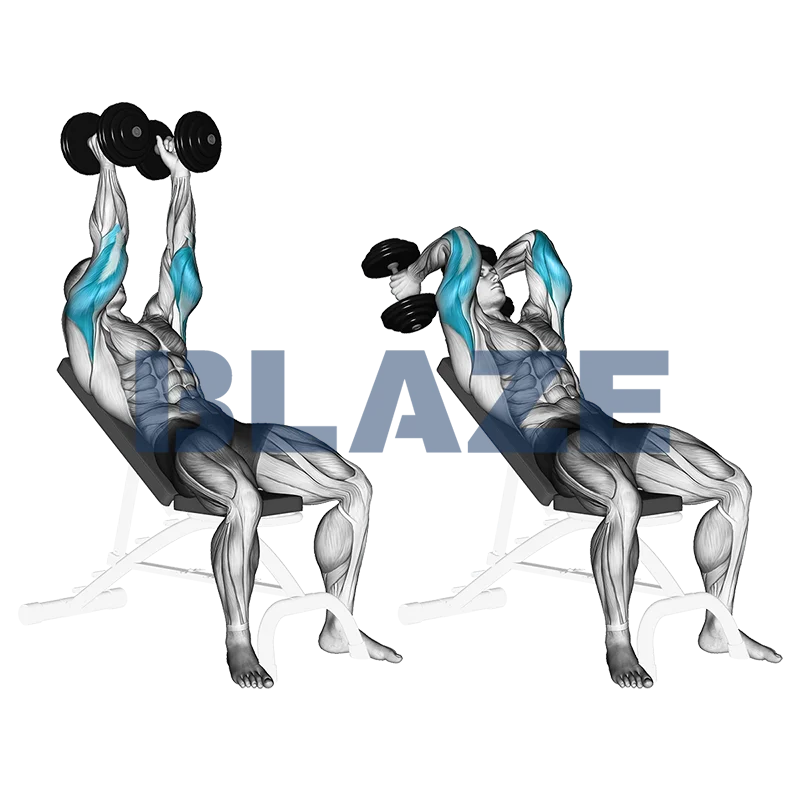
Triceps extension with dumbbells (inclined)
The dumbbell inclined triceps extension targets the triceps, specifically the long head, promoting balanced arm muscle development and improved upper body strength. This exercise also engages secondary muscles, including the shoulders and the core for stabilization. Athletes benefit from increased triceps strength, translating to enhanced performance in sports requiring powerful arm movements such as basketball and swimming. The incline position reduces shoulder strain, making it ideal for those looking to strengthen the triceps without risking injury.
| Primary muscle group: | Arms |
| Exercise type: | Dumbbell |
| Exercise goal: | Strength |
| Key metric: | Weight |
Community Averages
20kg
Avg. weight
44lbs
Avg. weight
Popularity
* Based on data from the Blaze community
Description
- 1Sit on an inclined flat bench and rest one dumbbell on each of your thighs.
- 2Kick the dumbbells up with one knee and rest the dumbbells on each side of your shoulder. Lean back on the bench while doing so.
- 3Adjust your hand position. Your palms should be facing each other. Raise the dumbbells above your head until your arms are almost fully extended. This is your starting position.
- 4Inhale as you slowly lower the dumbbells until you feel a slight stretch in your triceps and your dumbbells are behind your head.
- 5Your elbows should be stable and should be facing upwards at all time during this motion. The power should come from your triceps muscle.
- 6You have completed your first repetition. Repeat the motion in a controlled way and count your reps.
Tips & Tricks
Proper Starting Position: Ensure that the bench is set to a 45-degree incline and keep your feet firmly planted on the floor. This setup helps maintain stability and targets the triceps effectively.
Controlled Movement: Perform the exercise with a controlled motion. Lower the dumbbells slowly and avoid any jerky movements. This will help you prevent injury and maximize triceps engagement.
Full Range of Motion: Aim to lower the dumbbells until your forearms and biceps touch. This full range of motion ensures that you fully engage the triceps throughout the exercise.
Elbow Positioning: Keep your elbows close to your head and do not let them flare out. Elbows should remain stationary, pointing to the ceiling, to target the triceps more effectively.
Grip and Alignment: Hold the dumbbells with a neutral grip (palms facing each other) to reduce strain on the wrists and elbows. Ensure that your wrists stay in a neutral position to avoid unnecessary stress.
Breathing Technique: Inhale as you lower the dumbbells and exhale when you push them back up. Proper breathing helps maintain a steady rhythm and prevents you from holding your breath during the lift.
Weight Selection: Start with lighter weights to perfect your form and gradually increase the weight as you become more comfortable with the exercise.
Avoid Locking Elbows: When extending your arms, avoid locking your elbows to keep tension on the triceps and to reduce the risk of hyperextension injuries.
Core Engagement: Keep your core engaged throughout the exercise to maintain balance and prevent your lower back from arching excessively.
Warm-Up: Always perform a proper warm-up before starting any triceps workout to prepare your muscles and joints and reduce the risk of injury.
Track in the Blaze App
Download Blaze Workout Tracker to log this exercise with sets, reps, and progress tracking.