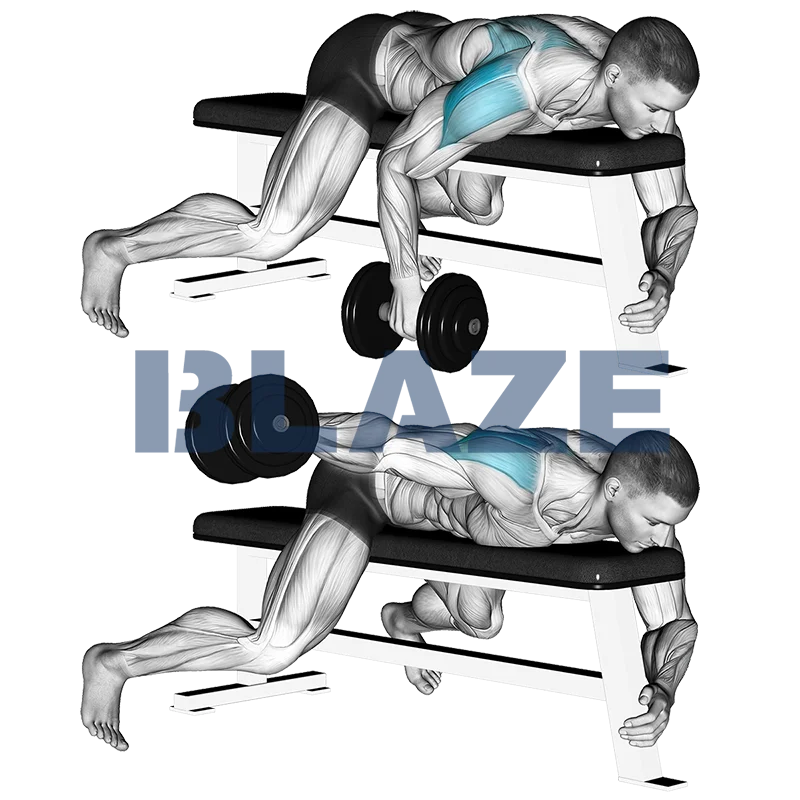
One arm rear lateral raise with dumbbell (lying)
The lying one-arm rear lateral raise with dumbbell is an effective exercise that primarily targets the rear deltoids, traps, and rhomboids, enhancing upper back strength and shoulder stability. This exercise promotes balanced shoulder development, improves posture, and reduces the risk of shoulder injuries. Athletes benefit from increased shoulder endurance and power, vital for sports requiring arm strength and precision, such as tennis, swimming, and basketball. Incorporating this exercise aids in achieving overall upper body symmetry and enhanced athletic performance.
| Primary muscle group: | Shoulders |
| Exercise type: | Dumbbell |
| Exercise goal: | Strength |
| Key metric: | Weight |
Community Averages
8kg
Avg. weight
17lbs
Avg. weight
Popularity
* Based on data from the Blaze community
Description
- 1Lie face down on a flat bench, ensuring the bench is high enough for the dumbbell to hang without touching the floor.
- 2Hold a dumbbell in one hand, spread your legs, and plant your feet firmly on the floor.
- 3Grasp the bench with your free hand for stability.
- 4With a slightly bent elbow, exhale as you raise the dumbbell out to the side.
- 5Hold the raised position for a count of two.
- 6Inhale as you lower the dumbbell back to the starting position in a controlled manner.
- 7Repeat for the desired number of repetitions.
- 8Switch arms and repeat the exercise for your opposite arm.
Tips & Tricks
Focus on Form: Maintain a straight line from your head to your toes. Keep your core tight to avoid unnecessary movement.
Controlled Movement: Perform the exercise slowly and with control. Avoid using momentum to lift the dumbbell.
Weight Selection: Choose a lighter weight to begin with. This exercise targets smaller muscles, so it's better to prioritize form over heavy lifting.
Isolate the Muscle: Ensure that your shoulder is the only joint moving. Avoid using your torso to help lift the weight.
Breathing: Exhale as you lift the dumbbell and inhale as you lower it. Proper breathing can help you maintain stability and form.
Mind-Muscle Connection: Focus on feeling the squeeze in your rear deltoids throughout the entire range of motion.
Range of Motion: Only lift the dumbbell until it’s in line with your shoulder to avoid unnecessary strain on your joints.
Rest Properly: Ensure you have sufficient rest periods between sets to maintain performance and reduce the risk of injury.
Track in the Blaze App
Download Blaze Workout Tracker to log this exercise with sets, reps, and progress tracking.