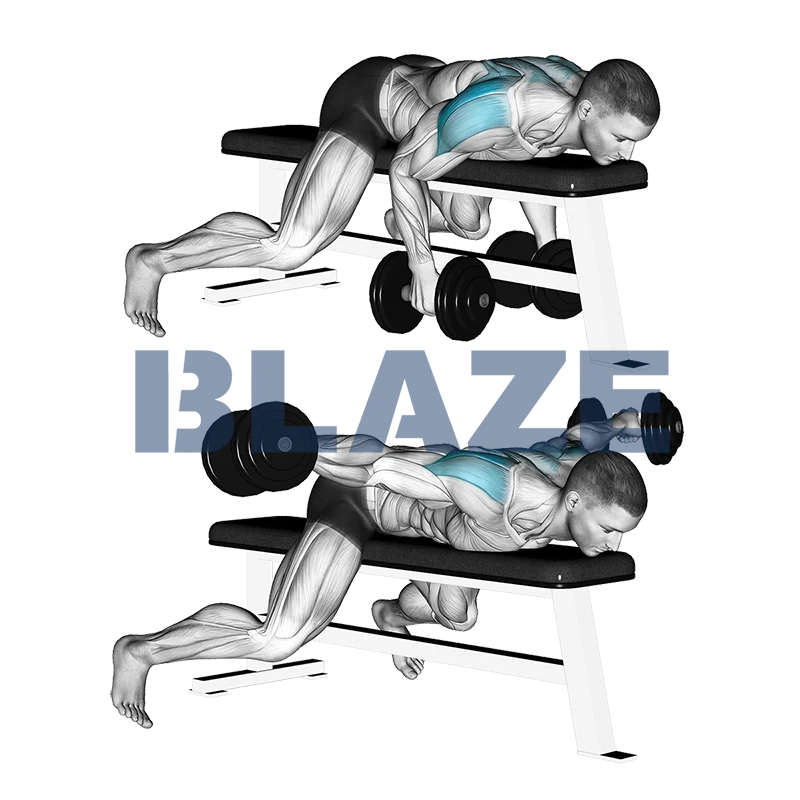
Lying rear lateral raise with dumbbells
The ying rear lateral raise with dumbbell primarily targets the posterior deltoids, with secondary activation of the trapezius and rhomboids. This exercise enhances shoulder stability and improves posture by strengthening the upper back. Athletes benefit from increased shoulder mobility and balanced muscle development, reducing injury risks. Ideal for those in sports requiring shoulder strength, such as swimming or tennis, this exercise also contributes to better performance in compound lifts.
| Primary muscle group: | Shoulders |
| Exercise type: | Dumbbell |
| Exercise goal: | Strength |
| Key metric: | Weight |
Community Averages
24kg
Avg. weight
52lbs
Avg. weight
Popularity
* Based on data from the Blaze community
Description
- 1Place two dumbbells on the floor, one on each side of a flat bench.
- 2Lie prone (on your front) on the bench and grasp a dumbbell in each hand.
- 3Spread your legs on the floor for support.
- 4Keeping your elbows slightly bent, exhale as you raise the dumbbells out to the sides.
- 5Hold the position for a count of two.
- 6Inhale as you lower the dumbbells back to the starting position in a controlled manner.
- 7Repeat for the prescribed number of repetitions.
Tips & Tricks
Focus on Your Form: It's crucial to keep your torso still during the exercise. Avoid using momentum to lift the weights; this engages the target muscles more effectively.
Maintain a Neutral Spine: Keep your back straight and maintain a neutral spine position throughout the movement. This helps to prevent injuries and ensures that you are effectively targeting the rear delts.
Use Light Weights: Start with lighter weights to master the form. Your rear delts are smaller muscles and do not require heavy weights to get a good workout.
Squeeze at the Top: When you lift the dumbbells, make sure to squeeze your shoulder blades together at the top of the movement. This iso-tension maximizes muscle activation.
Controlled Movements: Perform the exercise in a slow and controlled manner. This not only enhances muscle engagement but also reduces the risk of injury.
Breath Control: Inhale as you lower the dumbbells and exhale as you lift them. Proper breathing techniques support muscle efficiency and stamina.
Range of Motion:Focus on full range of motion. Lifting your arms too high can shift the emphasis away from the rear deltoids and possibly strain your shoulder joints.
Avoid Excessive Weight: Using too much weight can compromise your form and target the wrong muscle groups. Stick to a weight that allows you to complete the reps with proper form.
Include Variety: Incorporate other rear deltoid exercises like face pulls or reverse pec deck to keep your workouts varied and hit the muscles from different angles.
Regularly Stretch: Don't forget to stretch your shoulder muscles before and after your workout to improve flexibility and recovery.
Track in the Blaze App
Download Blaze Workout Tracker to log this exercise with sets, reps, and progress tracking.