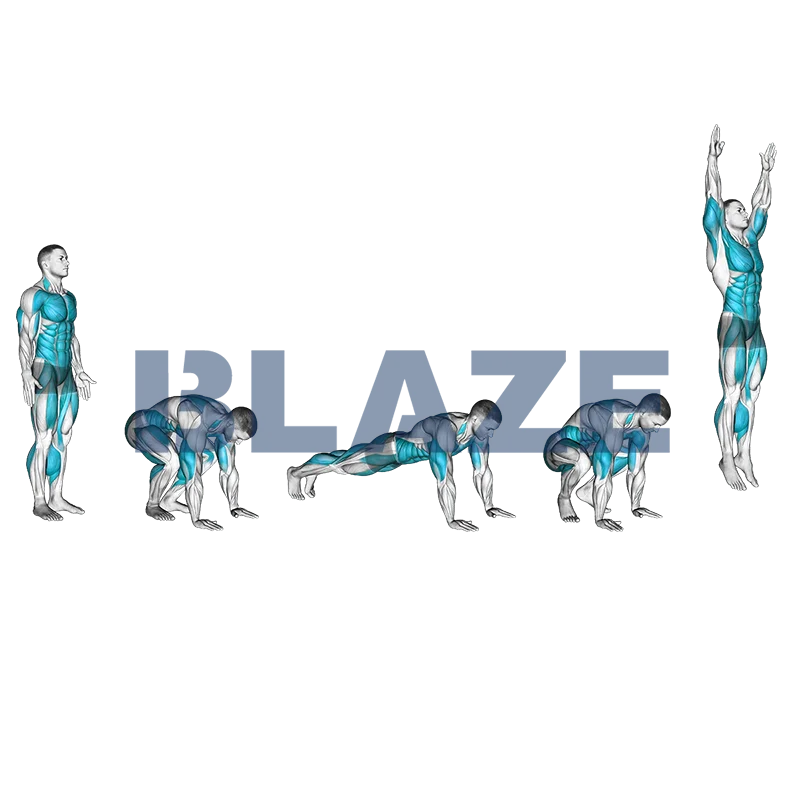
Burpee
Burpees are a full-body exercise that offers numerous benefits. They enhance cardiovascular fitness, boost endurance, and improve various muscle groups, including the chest, shoulders, triceps, quads, glutes, hamstrings, and core. This high-intensity, calorie-torching workout sharpens agility, coordination, and balance. Athletes profit from incorporating burpees into their routine as it builds explosive strength, improves aerobic capacity, and enhances overall athletic performance, making it a versatile addition to any training regimen.
| Primary muscle group: | FullBody |
| Exercise type: | Bodyweight |
| Exercise goal: | Cardio |
| Key metric: | Repetitions |
Community Averages
12
Avg. reps/set
Popularity
* Based on data from the Blaze community
Description
- 1Standing Position: Begin by standing with your feet shoulder-width apart. Keep your back straight, chest out, and arms at your sides.
- 2Squat Down: Lower yourself into a squat by bending your knees and driving them slightly past your toes while bringing your butt down. Your feet should remain flat on the floor. Place your hands on the floor (palms down) in front of your feet.
- 3High Plank Position: Kick your legs back to enter a high plank position with your body in a straight line from shoulders to heels. Keep your arms locked and head straight, looking slightly ahead.
- 4Lower Down: Bend your elbows and bring your body toward the floor to the bottom part of a push-up. Keep your body straight and core tight.
- 5Rise Back Up: Push yourself back up to the high plank position, maintaining a straight body.
- 6Return to Squat: Jump your legs forward to return to the squat position. Ensure your feet are flat on the floor.
- 7Explosive Jump: Launch yourself upward in an explosive jump, reaching your arms toward the ceiling.
- 8Reset: Land back in the original standing position and repeat the process for additional repetitions.
Tips & Tricks
Master Basic Movements: Before attempting full burpees, ensure you have a solid foundation in push-ups, plank holds, and squat jumps. Mastering these movements will make your burpees smoother and more efficient.
Controlled Descent: When lowering your body to the ground, focus on controlling your descent rather than dropping down too quickly. This can help prevent injuries and make the transition smoother.
Engage Core: Keep your core engaged throughout the movement to protect your spine and increase stability. This will help you perform the exercise more efficiently and with better form.
Breathing Technique: Breathe in during the jump and breathe out when you hit the plank position. Proper breathing helps in maintaining stamina and ensuring a consistent heart rate.
Modify if Necessary: If you're just starting out or find the movement too challenging, modify your burpees by stepping back into the plank position instead of jumping or by removing the jump at the end.
Pace Yourself: Don’t rush through your burpees. Maintain a steady, controlled pace to ensure you're performing each segment of the movement correctly. Speed can come once you have mastered the form.
Foot Placement: When jumping forward from the plank position, land with your feet outside your hands for better stability. This wider stance provides a solid base for the upward jump.
Soft Landing: When you jump at the end of the burpee, focus on landing softly to reduce impact on your joints. This can help prevent injuries, particularly to your knees and ankles.
Arm Position: Keep your hands shoulder-width apart when placing them on the ground. This provides a stable base and ensures your shoulders, wrists, and elbows are aligned properly.
Track in the Blaze App
Download Blaze Workout Tracker to log this exercise with sets, reps, and progress tracking.